Uncover the progress made and challenges faced by women in the industry today.
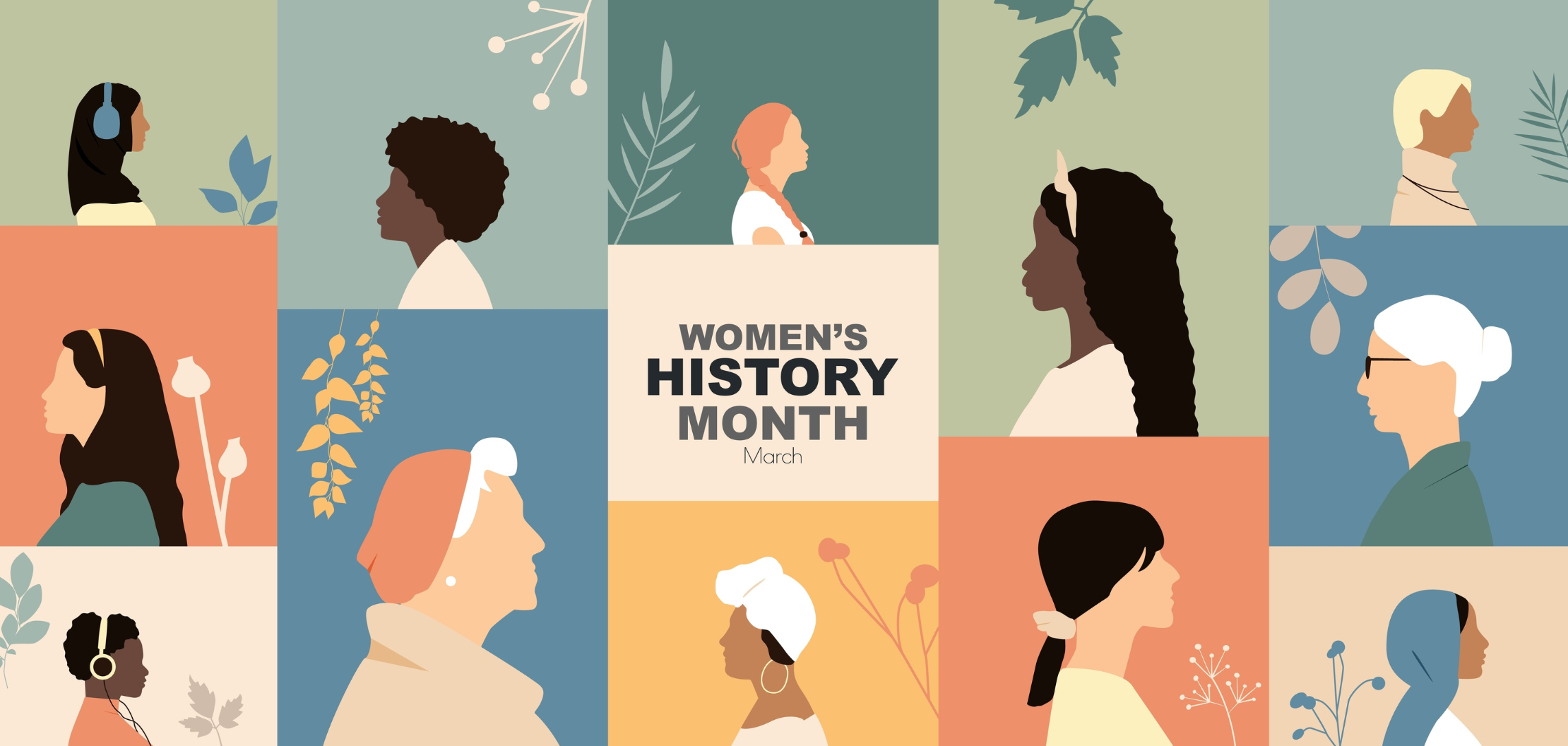
March is Women’s History Month, which of course encompasses International Women’s Day. So, we thought we’d take a look at some of the history – make that herstory – with a quick recap on some of the most important women who’ve made our industry what it is today.
This year’s themes
This year, Women’s History Month was focused on ‘Women Who Advocate for Equity, Diversity and Inclusion’. This year’s official colours were purple, green, and white – the colours adopted by the Suffragettes.
A little herstory…
The day’s origins lie in a women’s rights march in New York City in 1908. Then in 1917, at the height of WWI, Russian women marched demanding ‘bread and peace’. A few days later, the Tsar abdicated and the provisional government granted women emancipation. Since then, the day of the strike has been marked, with the UN making 8 March International Women’s Day in 1975.
So, in 2024, is there still a need for International Women’s Day? And a Women’s History Month?
You betcha.
According to a report from the World Bank, some 2.4 billion women of working age around the world receive fewer equal economic opportunities compared to men. Meanwhile, 178 countries put up legal barriers that prevent women’s full economic participation.
Certainly, that’s a lot of ground to make up. What’s the outlook for our industry, then?
How are we performing?
Nowadays, marketing – often characterised by the excesses of the so-called ‘Mad Men’ era – is one of the most gender diverse specialisms in the modern business world. In 2022, US women outnumbered men in Chief Marketing Officer (CMO) roles for the first time in a 51% to 49% split.
Here in the UK, Statista reports that women made up six in ten of the marketing workforce, with one in four professionals coming from an ethnic minority. Consumer research also consistently shows that women make more buying decisions than men.
How did we get here?
Arguably, the first ‘ad man’ was a woman. Mathilde C. Weil set up America’s first advertising agency, M.C. Weil in 1880 – years before J. Walter Thompson and decades before women had the vote. Weil specialised in medical advertising but ran all sorts of campaigns, and later ran her business alongside two other female partners.
In 1908, the J. Walter Thompson agency hired Helen Lansdown Resor as America’s first female copywriter. She worked on campaigns for P&G and Red Cross and is credited with pioneering editorial advertising as well as more emotive approaches.
It took until the 1940s for a woman, Herta Herzog, to become one of the first marketers to take a research-based approach. At McCann Erickson, Herzog set up marketing’s first dedicated think tank (looks like we have her to thank!), pioneering many of today’s marketing research techniques.
During the height of the civil rights movement in 1970, Barbara Proctor became the first African-American woman to own an ad agency, Proctor and Gardner Advertising. The year before, Proctor had been fired from her copywriting role for refusing to work on behalf of a brand which was parodying civil rights marchers.
Closer to our own timeline:
- In 2017 Sarah Golding, CEO of The&Partnership, became President of the IPA (Institute of Practitioners in Advertising). This was only the second time a woman held the position in over 100 years.
- Dara Treseder, SVP Global Head of Marketing, Communications & Membership at Peloton Interactive, earned the top spot on Forbes World’s Most Influential CMOs List in 2022 thanks to her ‘beyond the bike’ vision and ability to cooly respond to viral moments.
- Previously Global Communications Director for Instagram, Kristina Schake now serves as SVP and Chief Communications Officer at The Walt Disney Company – one of the biggest brands in the world.
- Finally, on the B2B side of things, Head of Global Marketing Olga Andrienko launched search software tool SEMrush in more than 50 markets – achieving a 90% YoY growth.
And those are just a few of the key female players in marketing and communications today.
Writing a new chapter
Of course, there’s still a great deal more to do to fully promote and reward the talents of 50% of the population. But it’s also undeniable that women in our industry have come a long way.
If you’re looking to become a woman in marketing, check out our Careers page. We’re always on the lookout for hardworking talent and diverse, refreshing perspectives.